Expert Help for OCD

Take Your Life Back from OCD
Offering expert treatment for all types of OCD, including unwanted obsessional thoughts. Our OCD treatment program is typically 10 weeks. We offer twice-weekly sessions, groups, and intensive programs. Intensive program can be in person or online. Low cost options available. Contact us...
Behavioral Wellness Clinic
392 Merrow Rd, Suite E,
Tolland, CT 06084
Office: (860) 830-7838
OCDTYPES
Obsessive-compulsive disorder comes in many forms
About Hoarding Disorder
What is Hoarding?
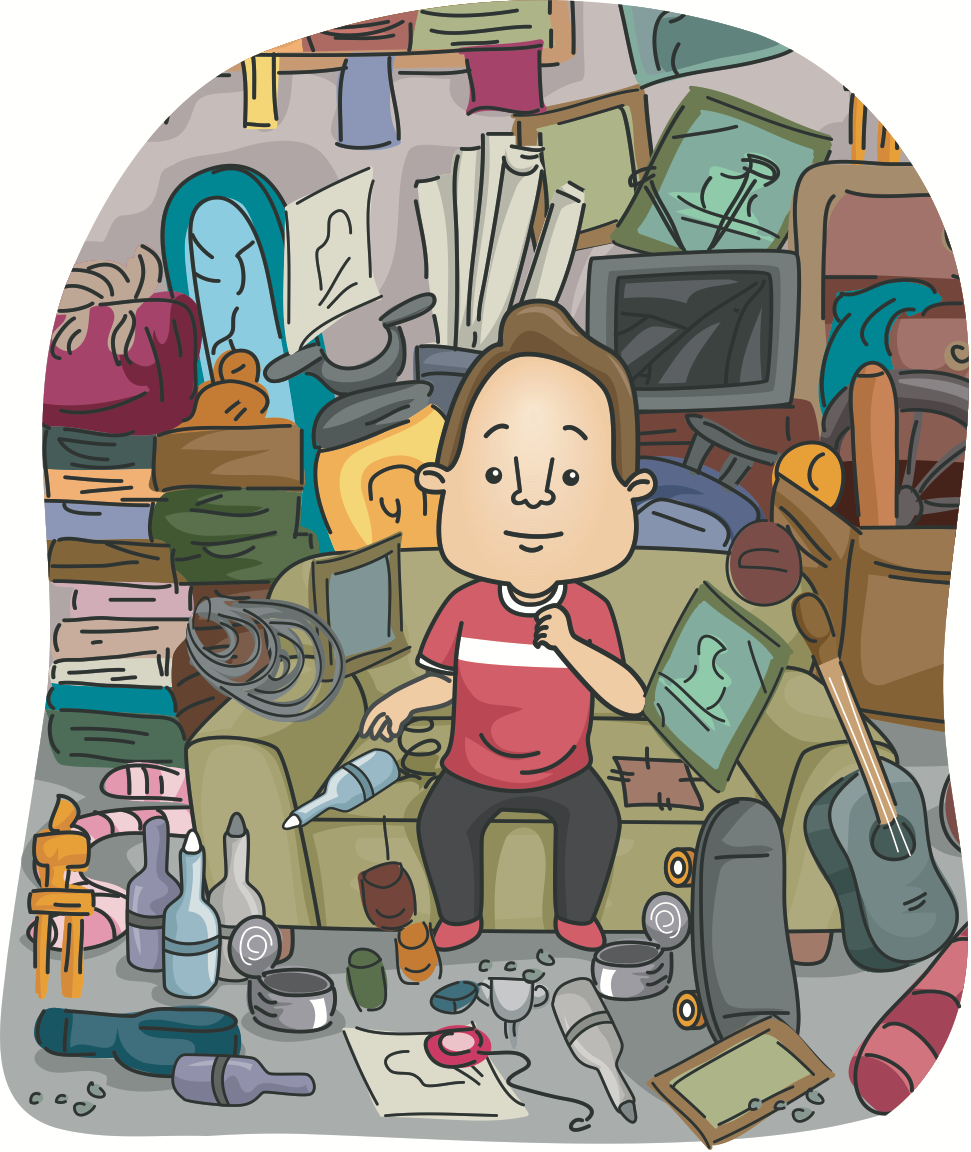
Hoarding disorder is the excessive collection and retention of any materials to the point that it interferes with day-to-day functioning and creates a hazard or potential hazard for the individual or others. Hoarding frequently develops into a vicious cycle whereby individuals almost literally become trapped in their own homes due to the sheer amount of clutter that typically amasses. This excess clutter often results in both decreased mobility within the home as well as decreased utility of the home itself. Characteristics of hoarding are:
- Difficulty discarding
- Clutter
- Excessive acquisition
Hoarding behaviors are chronic, begin very early in life. and tend to worsen over the years. It is estimated that 2%-5% of the population are hoarders.
Fears of people who hoard
Fears reported by hoarders include worries about losing items that may be needed later and exaggerated beliefs about the importance of material possessions. Hallmarks of people who hoard may include an excessive emotional attachment to possessions; difficulties with decision-making, categorization, and organization; a desire for an almost pathological perfectionism; and a tendency to engage in both procrastination and behavioral avoidance. Compulsions may include excessive shopping or collecting as well as other forms of acquisition (e.g., saving of postal mail, e-mail, and phone messages).
Impact of hoarding
Hoarding hinders one's occupation and social life. Family and friends have little desire to come to the home of a hoarder because of the excessive clutter and horrible living conditions. Or, more typically, hoarders will not allow others to visit and may create excuses to prevent people from visiting. Romantic relationships are not possible as most people do not want to do date someone who lives in clutter and chaos.
Examples of hoarding behaviors
Not being able to throw away old items that are obviously trash. One the other hand hoarders also clutter their living spaces with non-trash items. It is common to find new, never worn clothing. Some homes are full of new things that have never been removed from original packaging or still have attached price tags. Hoarders have piles mixed with trash and new things so their saving is not restricted to trash items. Showers and ovens may be sacrificed for extra storage space, or the passenger and backseats of a car may be unusable due to clutter Hoarders feel guilt associated with discarding items. Many will report that they do not want to "waste" something that still has useful life. Thus, they may have "moral" reasons for keeping things.
Why do People Hoard?
People with hoarding disorder give the same reasons for saving items that non-hoarders do. The huge difference between hoarders and non hoarders is the volume and variety of saving.
Emotional attachment to an object associated with a significant person, place, event or time.
- Items are seen as a part of themselves, so losing an item would be the same as losing a piece of ones self or ones history; items are part of person identity. Feelings of grief and loss can accompany, similar to losing a person.
- There is also a tendency to assign human like qualities to possessions. For example, one study reported a case where a woman bought a dozen puppets from a TV shopping station because no one bid on them and she felt afraid the puppets feelings were being hurt.
- Comfort and security provided by items
- Hoarders are in a state of perpetual "just in case I need this," so they may carry lots of items with them.
People who hoard may feel a sense of security and comfort when surrounded by their possessions. For example, researchers reported a case where a woman who had had a very stressful day remarked that she wanted to go home and gather her treasures around her.
Items are saved for their usefulness.
- People who hoard feel guilt for not using up or wasting an item when it could be used later. This is the strongest predictor of hoarding severity. Hoarding sometimes insist they can get rid of items if they want but progress in getting rid of items is slow and usually new items are still being acquired.
- Fear of losing important information: this is closely associated with lack or memory, which can really be a lack of confidence in memory. Hoarders will say that items help them remember things, i.e. "saving items means I do not need a good memory"
- People hoard because of the exaggerated desire to have control over their possessions. Very resistant to having people touch or share their items. Unauthorized touches can result in strong reactions (because items are seen as an extension of self, unauthorized touching may be seen as a violation).
Genetics may play a role.
- Hoarding tends to run in families. The OCD Collaborative Genetics Study found that genetic linkage findings are different in OCD families with and without hoarding behavior, suggesting that a region on chromosome 14 is linked with compulsive hoarding behavior in these families and that hoarding is a distinct genetic subtype of OCD.
Hoarding disorder can be effectively treated with cognitive-behavioral therapy. Contact the New England OCD Institute for help.
Next: Learn about Hoarding: Safety & Social issues.